Whitecoat gives hospital leaders the performance data they need before a new nurse's first shift. The learners rotating through your units are the most thoroughly observed candidates you will ever see. Whitecoat makes that record usable.
Host · Observe · Recruit · Onboard, without re-collecting a single document
Only one of those shows up in the hiring decision. The evidence already exists. It just lives in a different system than the one your recruiters use.
What most health systems have on a new graduate at offer time.
What Whitecoat puts in front of your nurse leaders instead.
The same four stages, in the same platform, with the same record moving through them.
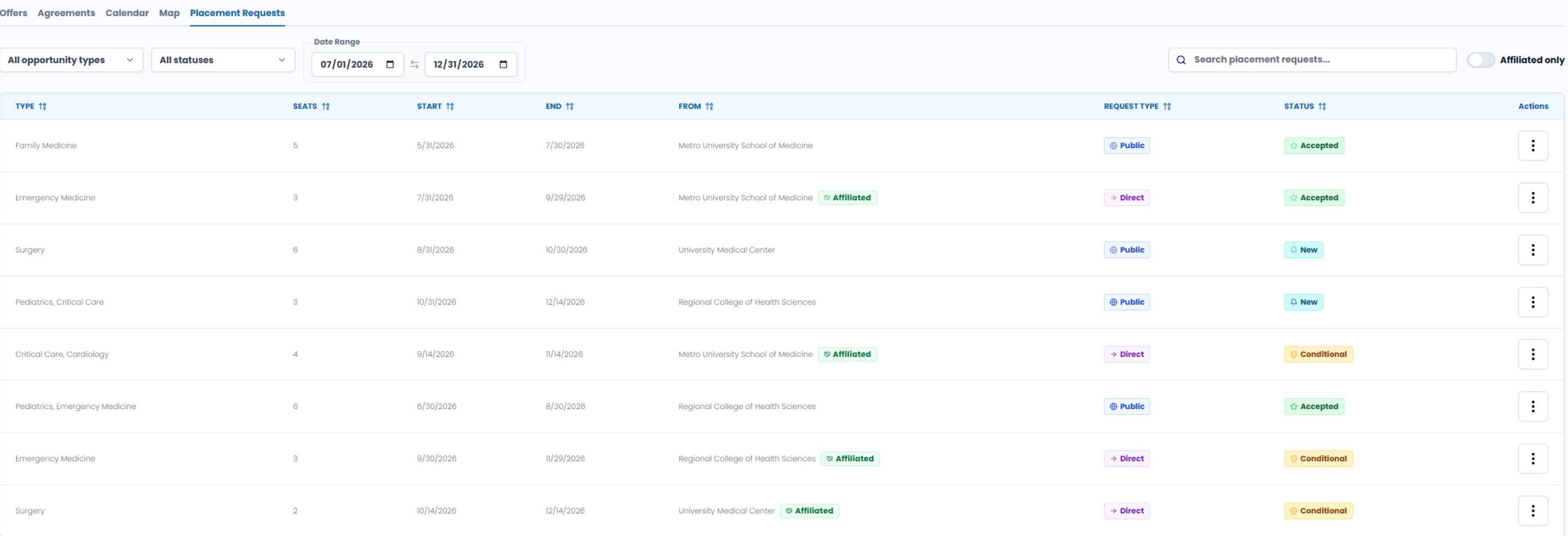
Publish the capacity you want to share, review incoming requests in one queue, and fill seats with the programs you actually want to partner with.
Your preceptors assess learners from their phones in under a minute. Every observation builds a performance record you own a view into.
Post roles to the learners already inside your system and filter by unit experience, competency evidence, and preceptor recommendation.
Her student compliance file becomes her employee file. Orientation starts from what she has proven, not from zero.
Rotation type, seats, dates, requesting program, and status at a glance, and full control over which partners can see what you have available.
The requirements she completed as a learner on your units are the requirements she needs as an employee on your units. Whitecoat carries the verified file across the line instead of restarting it.
Immunizations, background, screens, and trainings stay verified and dated.
Orientation targets the gaps her record shows rather than covering everything.
She already knows the unit, the charting, and the people she is joining.
A pipeline of candidates you have observed, with compliance already handled and fewer surprises after hire.
Placements get filled and graduates get hired. That is the outcome every program is measured on.
Twelve weeks of work becomes evidence they can carry into an offer, instead of disappearing at rotation close.
Request a demo or ask a general question. A person on our team will get back to you quickly, not a queue.